
Search Results
No results found
About THE NINETEENTH CENTURY (Accession: 224)
- Title: THE NINETEENTH CENTURY (Accession: 224)
- Author(s): Baron Ferdinand de Rothschild
- Date of creation: 1888-1893
- Extent:
- Material: Leather, paper
- Physical Location: Waddesdon Manor Archive
Annotations
Transcript
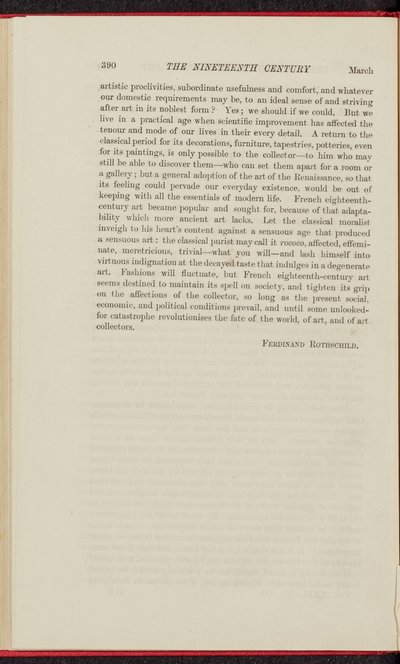
390 THE NINETEENTH CENTURY March
artistic proclivities, subordinate usefulness and comfort, and whatever
our domestic requirements may be, to an ideal sense of and striving
after art in its noblest form ? Yes; we should if we could. But we
live in a practical age when scientific improvement has affected the
tenour and mode of our lives in their every detail. A return to the
classical period for its decorations, furniture, tapestries, potteries, even
for its paintings, is only possible to the collector—to him who may
still be able to discover them—who can set them apart for a room or
a gallery; buta general adoption of the art of the Renaissance, so that
its feeling could pervade our everyday existence, would be out of
keeping with all the essentials of modern life. French eighteenth-
century art became popular and sought for, because of that adapta-
bility which more ancient art lacks, Let the classical moralist
inveigh to his heart’s content against a sensuous age that produced
a sensuous art: the classical purist may call it rococo, affected, effemi-
nate, meretricious, trivial—what you will—and lash himself into
virtuous indignation at the decayed taste that indulges ina degenerate
art. Fashions will fluctuate, but French eighteenth-century art
seems destined to maintain its spell on society, and tighten its grip
on the affections of the collector, so long as the present social,
economic, and political conditions prevail, and until some unlooked-
for catastrophe revolutionises the fate of the world, of art, and of art
collectors,
FERDINAND ROTHSCHILD.